
– 3 –
The wolf is coming to eat the world.
There are armies marshalling. There are missiles coming, bombs being loaded, hard men prepping their weaponry for a fight.
The wolf is coming to eat the world.
There are children being born. There are children playing. There are children who have grown old and grey.
The wolf is coming to eat the world.
Starlight falls on the world, from Sirius, from Barnard’s Star, from Wolf 359, and most certainly from the sun. Plants grow. The ocean surges, rises, falls. Birds sing. Animals rustle in the brush.
The wolf is coming to eat the world.
And because the wolf is coming; because the wolf is free —
Jeremiah Clean gets on a plane.
He obtains a passport. He buys a ticket. He attempts to board a flight to England. He is detained by the TSA. They wish to ask him certain questions. They wish to interfere in the matters of Jeremiah Clean.
After a while they cease to have such desires and Jeremiah flies.
Jeremiah Clean cannot help noticing, over the course of the flight, how very messy the process is. He wants to adjust the flow of air over the wings. He reminds himself, repeatedly, that by doing so he will cause the gigantic metal box he is contained in to plummet helplessly into the sea.
“I would survive, but —
“It would not be so very cleanly,” he explains.
There is a baby crying two seats behind him. He silences it.
There is a woman a couple rows ahead of him whom he thinks might be a Muslim terrorist. There is a man sitting next to her whom Jeremiah is pretty sure is a merman who, doubtless as the result of some tawdry affair with said Muslim terrorist, has been given legs.
He explains these matters to the stewardess, who is dismissive.
“That’s ridiculous,” she says. “Someone has mis-explained the plot of the movie to you, sir.”
He sighs.
Now there’s no point in even watching Citizen Kane.
He eats peanuts that have been made at a factory that also processes peanuts. He allows the clean redundancy of that to reassure him, even when it seems like the creature on the wing of the airplane might be considering tearing it apart.
He watches a movie. He watches another movie. He plays games. He watches the merman slip off to the bathroom to pour water over himself to keep from drying out on the long plane flight. It’ll probably serve the merman right, he thinks, vaguely, when he discovers just how haunted the airplane bathroom is.
Jeremiah Clean is not very good at traveling. It is unnerving him. He cannot properly balance the pressure in his ears, because his heart is pure.
Finally he lands. He steps down onto solid ground again. His gravitas returns to him.
He walks through the British Isles.
He reaches the ruined Gulley mansion.
He turns his eyes towards the horizon, where he expects he’ll see the wolf.
Instead there is an Ed.
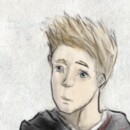
Edmund is staggering across the ruins. Edmund stops in front of him. Edmund looks him up and down.
“Oh,” says Edmund.
“It is cleaner,” says Jeremiah Clean, “to say ‘hello.’”
“Hello,” says Edmund.
“I am looking,” says Jeremiah Clean, “for a wolf.”
“Oh.”
“He is,” Jeremiah says, “Unclean.”
Edmund half-smiles. “He was always a very . . . furry . . . wolf. This one time, I went to put on shoes, you know, and they were completely full of loose Fenris fur.”
“Oh,” says Jeremiah Clean.
“It was exceedingly squishy.”
There is a pause. Jeremiah Clean starts to say something.
“So. Squishy,” emphasizes Edmund Gulley. His eyes are white with horrified reminiscence: there is no pupil and no iris in them. Then after a while he comes back to himself, orients on Jeremiah Clean, and he shrugs.
Jeremiah Clean is looking at him.
“You have bits,” Jeremiah says, “of flesh and blood, a little.” He gestures towards his lip. “Here.”
“Lots of corpses,” says Edmund. “Seemed kind of, you know, a waste.”
Jeremiah Clean isn’t sure whether disposing of corpses by eating them is cleanly or uncleanly. So he starts to walk past Edmund. But Edmund takes his arm.
“You’re going to fight the wolf?” says Edmund.
“Such things as giant wolves,” says Jeremiah Clean, “they oughtn’t be. They make the world too brutal. Too messy. Too . . . wrong.”
“I see,” Edmund says, because he does.
And listen. Listen. This is important. He was free — ish. He’d turned his back, you know. He’d walked away. He’d abandoned Fenris Wolf. But he doesn’t let the janitor’s judgment stand.
Edmund attacks.
I don’t mean that it’s good to try to eat people just because they say mean things about your wolf. You shouldn’t do that. I don’t mean that he has a chance or anything. He doesn’t. It’s Jeremiah Clean.
I just kind of like that he did that anyway.
And Jeremiah Clean pulls it from him, dusts him off, and sets him down. He leaves Edmund there, fresh and clean and smelling vaguely of a pine tree; no cannibalism in this boy, no wolf-gold, not even the nithrid arts. Not even especially good or bad, not any longer: just Edmund Gulley, a British boy.
Edmund looks after him, dazed, as he walks away.
Edmund Gulley’s heart beats a few more times.
It’s in a box in his pocket.
Then it stops, pretty much for that reason, and so does he.

– 4 –
A magnet is raging. A magnet is pulling. It is dragging Lucy Souvante towards the Lethal Magnet School.
Now and then she will stop. Now and then she will catch something on her umbrella.
She will hang in the air, pulled. She will consider.
There is something nagging at her mind. She cannot place it.
Ultimately she is in the air over Brentwood, and the boot is coming down, before she understands it. Memory trickles through her brain and the pieces come together.
She pulls out a snotty evil prophecy. She rubs it off on the hem of her flowing skirt.
It is the evil prophecy. It is her evil prophecy. It is the prophecy she was supposed to have —
“Yes!” she cheers, in the sky over Brentwood, and whips it around, and brandishes it at the wolf-magnet:
One. Two. Three.
And as the prophecy grinds down the magnet into nothing, as the ulfleiðarsteinn shudders, ceases spinning, and suddenly goes out; as she is falling towards the campus at an angle, not quite to intersect the boot, she spins in the air, and she hugs her evil prophecy, and then she holds it out at arms’-length and it unfurls —
She reads the golden letters of it.
She reads the golden letters of it, says the prophecy.
And, a little lower,
RUN.
– 5 –
Fenris snaps up a handful of students. It claws down a building. It is only a few blocks away from the magnet.
It can see the boot. It is descending, in flames.
Cheryl rips the hammer shaft out of her side. It squelches. It is a hammer as she pulls it around and grips it in two hands.
Her eyesocket burns with black fire. The hammer head does too.
She is floating free of the floor of Tom’s upside-down Vault of Forbidden Things. She is reorienting. She left the world as a girl who couldn’t even save a snake — er, kill. A girl who couldn’t even kill —
She isn’t sure what she left the world as a girl unable to do what to a paper snake is.
Tom’s infinitive splitter slams down on that sentence, once, twice, and then gives up.
She left the world as a human; she is coming down again as a god.
The sea shakes with the gravity of the boot. Waves of power are coming off of it; they stir up the sea, make it sea-wroth, and the foam of the sea is beginning to fold itself into a snake.
The wolf doesn’t want to be here.
The wolf whines, deep in its throat.
The scissors are focused on their enemy. They glide past Peter. They ignore him. They come down after the boot in a great and metal rain.
The magnet shudders under the burden of prophecy. It shatters. It denatures. It ceases, quite suddenly, to pull.
Fenris staggers.
The wolf lurches up to its feet. It glances skywards. It scrambles forward, but there is no scrambling forward.
It moves, but there is no time left for moving
Listen. You have to understand this.
If you’ve ever been a giant boot in space that’s got to stomp down onto a secondary school, and half a wolf, I’m sure you remember what it feels like. If you haven’t, well —
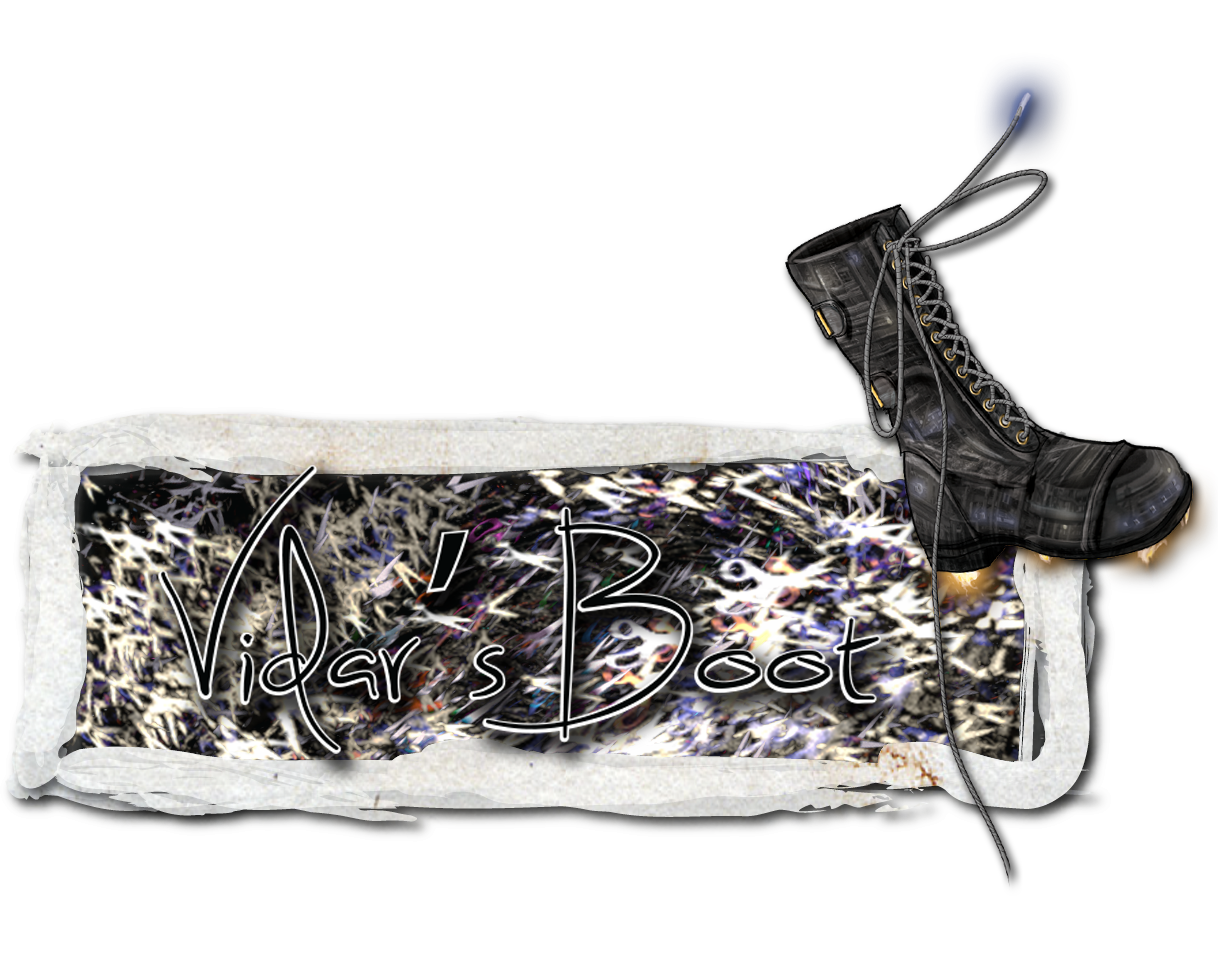
Vidar’s Boot slams down, hard, onto the school.
It’s the best.

– 6 –
How many scissors? I cannot count them. Many are flattened under the boot or battered away by the wave of reality-alteration that spreads from it, but uncountable numbers remain. They pour themselves down in a single metal sheet, indivisible, like the horn of a narwhal spiraling down, ten miles around at its narrow tip.
And half a wolf.
That is a terrible thing. Half a wolf, its guts spilling out behind it, but the magnet’s breaking has done some good for it, and the way the boot had shifted, just a little, by the shaking and the cutting of its tether, before Cheryl brought it down.
Half a wolf, whining and struggling, sickening, its eyes rolling, its tongues lolling, but it is not dead; and that wolf, that particular wolf, well, if it is not dead, then it should not be possible for it to die.
And there is a snake, and oh, how ungodly is that snake. It is rising, and it is rising, and it is pierced through over and over again by the scissors but the will of Vidar’s Boot commands that it does not die.
Its teeth close on the side of the wolf. The wolf snaps at the scissors, gulps them down. And the boot is shattering, fraying, leaving only Cheryl, standing there, with the hammer of science —
I probably shouldn’t call it that.
With the hammer of deciding what shall live and what shall die held and coiling with lightning in her hand.
And in the corner of the scene, over there —
You have to look at it from the right angle. If you’re too close, you won’t see him, and if you’re too far away, well, I guess, you wouldn’t see him either.
In the corner of the scene, there’s a man with a janitor’s cart, who begins to clean it. He starts at the top right corner of it all and he scrubs a bit of the descending scissors-horde away.
There’s a gap there. There’s a hole in the storm.
He works his way downwards.
Fenris is gasping, great gasps. It is trying to eat faster than the poison of the snake can spread through it; trying to consume enough of the earth and the falling stream from the scissors-sky to heal.
The guts of the wolf are cleaned away.
Cheryl sees him. She opens her mouth in a moment of panic; she tries to lever the hammer to point at him; but to keep the paper serpent alive amidst the scissors-rain takes everything she has. She has nothing left to address towards the cleaning man.
Bit by bit, he scrubs away all of it. From right to left, from top to bottom, he cleans it all away.
At the last there are only the great jaws of the wolf, closed on the serpent’s neck; and the scissors pierced through the brainpan; and green they have become from the poison of the snake; and rubble.
“That is a perversion,” says Jeremiah Clean, and he shakes a finger at it warningly.
And then —
Well.
Of all that moved on the surface of the world, and met at the Lethal Magnet School for Wayward Youth that day —
Little remains to be said.
They came down from the sky, or up from the ground; from over the sea, or from space; and they met.
If you went there now —
Where those things met — you would find ground that is polished like glass; and a handful of stones where one may grieve, and the flowers that people may come and leave; and the shining blue crystal waters of an artificial bay.
That’s all.
There is nothing that may stand against Jeremiah Clean, you see, because his heart is pure.
Even Lucy Souvante —
Even the evil prophet herself — she did well simply to survive. To scramble away. To hide and to wait.
And she the evil prophet of space!
The wolf is gone. The snake is gone. The scissors no longer fall. And if there is anything in you which can sympathize with the Fan Hoeng — and I will admit, freely, that I have never given you any particular in-story reason to, except, they are people, they are people, they talk, they think, they reason, they feel, like you or me —
Well, that’s gone too.
The boot that fell from space, no more. No more the Lethal Magnet School.
It was all quite messy. It was terrible. It was not a merry Christmas at all.
So he cleaned away, and that’s it; it’s all over.
They’re all done.


– 1 –
The warlord Thon-Gul X has sent a swarm of scissors to destroy the world; and a world-killing meteor; and an evil prophecy; but something still disturbs him.
“It is possible,” he says, “that the Earth will survive all these things by using a principle outside of and transcending the rock, paper, and scissors known to space.”
He wrestles with intimations of hobbits, Spock, and spiders.
He cannot grasp them. He cannot grapple with them. He cannot conceptualize them.
They haven’t even heard of the planet Vulcan, in space.
He simply knows that — outside the boundaries of his knowledge, his understanding, his intentions — there might be something more.
That is why there is a monstrous needle-thin ray racing towards the Earth even as we speak.
It has been traveling for nearly seven hundred years. It is coming to unmake the Earth, to blast the whole of it into nothing, to turn it into the Decohesion Engine, the Principle of Thon-Gul X’s omnipotence: an ultimate, glorious power born of death and a terrible light.
And sometimes he thinks, but can a needle-thin ray really break a planet?
And he starts to answer —
But then he stops.
He resists that thought. He assumes he will be successful. He daren’t even wonder.
It is ultimately, fundamentally, and structurally undecidable; to think too much upon it would lure his thoughts into a trap set long ago for him by Hans.
To answer is to rule that “space laser” either beats, ties with, or loses when opposed by “rock;” and this thing, until the cosmic institute of rock-paper-scissors makes its ruling, not even a wicked god may do.

– 2 –
In the end they ravened, and I think something beautiful would have been born of that.
But they were taken by Jeremiah Clean.
He took the wolf. He took the stars. He took the sky. He’s at last saved us from all our enemies; and there’s nothing left at all.
– 3 –
But I’m getting years ahead of myself, he hasn’t done that much yet, and this story isn’t really about it, even if he had.
It isn’t about any of them, any of those beautiful things he killed.
It isn’t even about him.
This story is about Mr. Enemy.
– 1 –
You can’t make scissors any more. Not since that day. You can barely spread two fingers of your hand.
You can’t fold paper into shapes.
Boots are gone. Hammers are gone. The empire of the Fan Hoeng, gone.
There isn’t even the Fan Hoeng star.
I like to think that’s just perspective. I like to think that Jeremiah Clean doesn’t have the power to scrub away whole worlds from space — that he’s just the god of our little world, you know? And everything else is still real.
But I really can’t promise that. It makes sense to me, but I can’t.
Those things are gone.

– 2 –
Gotterdammerung, I am told, is a lower energy state. It is easier than a sensible world.
And nothing at all — I suppose —
Nothing at all would be simpler yet.
– 3 –
Some people think the evil prophet of space is Christ reborn. Others want to measure her with scientific instruments. But everyone who approaches her dies!
“Space does not like you,” the prophet says to the audience that gathers before her.
There are rivers of blood on the Earth in those final days. There are locusts that fall from the Heavens. The sky is full of fire, and the omens are omen-wroth.
Jeremiah Clean mops up the blood. He sprays all the locusts.
He leaves the fire and the omens alone.
“You look outwards towards space,” says Lucy Souvante. “You make puppy-dog faces. You project onto space with your purposes and your expectations. Space is confused and nauseated by this! Space is not your frontier. It is not your world’s Heaven. Space is a cold, empty void! You need to stop hoping and dreaming towards it.”
She licks her lips.
“So I am going to kill all of you,” she says, “in the hopes this will make you stop.”
“Hallelujah!” cries somebody in the crowd.
Then she brandishes her evil prophecy and most of the people in the crowd suffer from explosive decompression. Those who do not she hangs from spikes and leaves there to die.
Conventional weaponry cannot stop her. She is a Fan Hoeng assassin and an evil prophet. She studied at the legendary Lethal Magnet School before it was stomped down and glassed over. She may corrode your systems, change the patterns of you, rewrite the book and software of you and in the image of her wicked text. She may slaughter you with her umbrella. She may brandish an evil prophecy at you, or play rock-paper-scissors against you, and to your death. She walks through armies and she leaves them in ruins, gasping and coughing out their life and blood, and she does not even care that this is bad.
“I do this because it is prophesied,” says the evil prophet of space.
She looks at her prophecy. She confirms that’s what she was supposed to have said.
“I do this because I must.”
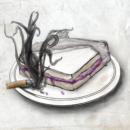
She is on a street corner in Branxton, Northumberland. She is eating her lunch, a tuna sandwich, on top of an overturned tank. Everyone else has fled Branxton save for an abandoned and unhappy dog so there’s no real audience for her explanation but explaining herself has recently become sort of habitual for the evil prophet of space.
“Behold!” she says, and unfurls the scroll of her evil prophecy.
The scroll is covered in the gleaming golden letters of space. Hesitantly, angered by the evil prophecy, the abandoned dog barks.
It is bad, incidentally, to nuke pic —
You know what? I’m not bothering. I give up. I have tried but I think no matter how many times I explain this people will still nuke picturesque British communities because, well, I guess, probably because they are there.
Nuclear weapons fall upon Branxton. They crunch down around her like pine cones falling to the Earth.
They burst into an extraordinary nuclear rage.
Local crops mutate.
The dog dies.
All around the evil prophet of space fire blooms. But she holds up the scroll of her evil prophecy and says, “Paper beats nukes!”
And it is so.

– 4 –
Why does she survive? Why her, of all the unclean things?
Because it is prophesied.
Because her survival is written of, and that is a tidy thing. Because to be born in service to a destiny, and to live in service to a prophecy, is cleanly; and to unmake people with a prophecy is cleanly; so she shall be one of the last things left.
That’s what it tells her, in her prophecy.
That they shall meet at last in two halves of an empty world. She, with the evil prophecy; he with his . . . janitorial cart of good . . . and they shall do battle then; and he shall scrub away the letters of her evil prophecy one by one, and all the stars go out.
What could be cleaner than that?
And she accepts it.
She will allow it. The Fan Hoeng are gone. Everyone she cared about is gone. Her hat doesn’t even really work without Fenris and Edmund.
So it’s fine to her to dream of that final meeting with the janitor of Earth;
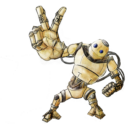
But still, when she has a chance, she scours the prophecy, looking for hints and omens, portents, indications that she will, before that final end, get to play rock-paper-scissors against someone worthy of her, have at least one game worthy of her; against a robot, maybe, or a really sharp goat.
Sponsors
Today's
STRANGE ENCOUNTER ...

Boot
