– 5 –
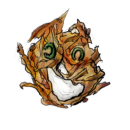
Jane makes an enemy. Well, more of a potato pancake, really. She fries it up in a pan.
It has two ears. It has two eyes. It has a nose. “It’s Johnny Pancake!” she says.
She doesn’t eat it, though.
“It’s not that it’s too cute,” she says. “I’m just not hungry. I made too much!”
So she leaves Johnny Pancake on the sink.
It’s about ten years before Mr. Enemy. Fifteen, before the jaguars’ll come down.
. . .
Jane sleeps. She goes to school. Then she comes home. She invites a young girl named Emily over. Then she and Emily play.
“Ew,” says Jane, looking at Johnny Pancake. “I think he’s going bad.”
Emily grins a little. Emily’s been taught by a dwarf-smith. She’s a girl with superior knowledge! “You know,” she says, “food doesn’t have to go bad like that.”
“Oh?”
“The reason food goes bad,” Emily says, “is the entropy. But if you feed the food, that balances the entropy out!”
“That’s true!” Jane realizes. “It’s adding energy usable for work from outside the system!”
. . .
Jane tries feeding Johnny Pancake some cheese food. He doesn’t eat it, because he isn’t cheese. She tries feeding him some pizza food and some fish food. Then she bonks herself on the side of her head. Duh! She takes down the big box of potato pancake food and pours some on Johnny Pancake.
“See?” Emily says. “He’s less rotten already!”
She tickles Johnny Pancake under the chin.
“There’s a good potato,” she says.
“That’s so,” Jane agrees.
“You gonna eat him now?” Emily says.
“Nah,” Jane says, giggling. “I ate his whole family for dinner yesterday.”
They play, instead.
. . .
Jane sleeps. She wakes up. She goes to school. She comes home. She looks at Johnny Pancake.
“You gonna throw that out?” Martin asks. He’s her brother. Well, her adoptive brother. Well, the guy who found her in the pantry. Really, there is no good way to summarize their relationship.
“No,” she says. “Silly! That’s Johnny Pancake.”
“No?”
“He’s not going bad,” Jane says, “so I won’t eat him.”
“Hmm,” Martin says. He pokes at Johnny Pancake. “Looks pretty bad to me.”
But he shrugs. He takes down the potato pancake food. He tosses the box to Jane. Then he goes off to his room to do whatever it is boys actually do.
(Jane isn’t quite sure. It’s mysterious!)
So she feeds Johnny Pancake and puts the box of potato pancake food away.
. . .
Days pass.
Eventually Martin moves Johnny Pancake to a special spot on the dining room table, in a little glass pan just his size, with a little ribbon by his head.
“I can’t tell if you’re teasing me or being nice to my potato pancake,” Jane says.
“I’m not inclined to specify,” Martin says.
. . .
It seems to Jane that she should probably eat Johnny Pancake sometime. But it’s never a good time. She doesn’t want him to go bad, either, so she feeds him every day.
. . .
One day, as Jane is working on her homework, she feels a strange presence in the room.
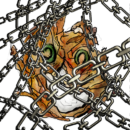
“You’ve done that problem wrong,” says the voice of Johnny Pancake.
Jane beams. “You woke up!”
She looks up. Johnny Pancake is motionless. His voice is a psychic projection.
. . .
“Common wisdom says that you shouldn’t feed food more than a few times,” Johnny Pancake says, “lest it grow too strong.”
“My wisdom is of the uncommon variety,” says Jane. “That’s why this geometry problem’s so hard!”
“It might help to remember that triangles have three sides.”
“Yes,” agrees Jane.
She erases the problem and starts over. After a moment, she says, “Is it okay that I haven’t eaten you yet?”
“Yes. I would in fact rather that you not eat me. But please, Jane, bear in mind that I must not grow rotten; for I am awake now, and if I rot, I shall take a horrible vengeance on your civilization.”
“It’s a deal!” says Jane.
. . .
Jane is happier now that Johnny Pancake is awake. He helps her with her homework. Once he develops basic telekinetic abilities, he helps her with chores. Eventually, Martin finds out.
“Jane,” Martin says, “this floor appears to have been vacuumed by a telekinetic potato pancake.”
“What an interesting observation!” Jane declares.
Martin narrows his eyes suspiciously. “If your potato pancake has woken up, it’s a terrible threat to human civilization.”
“Is that a problem?”
Martin considers this for a time.

. . .
“You know that you have to do your own schoolwork,” Martin says, uncomfortably. “And chores. The adversity sharpens your spirit!”
“I see,” says Jane.
“So if you’re having a potato pancake do them, we might have to eat him. That’s all I’m saying.”
“But if I made the potato pancake and feed it every day, isn’t its work a product of my labor?”
“Nope!”
Jane frowns at him. Then she sighs.
“Fine,” she says, weighed down by the burdens of living in an unjust universe. “I’ll do my own chores and homework.”
. . .
It is five nights later when hunger wakes Jane. It roils in her belly. It writhes like a living thing. She wakes up. She looks stealthily this way and that. Then she sneaks down to the kitchen to get a secret snack.
. . .
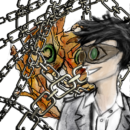
The kitchen is not empty. The lights are dim but they are not off. Martin is there. Johnny Pancake is there. It’s not a surprise snack intervention! They’re just discussing mysterious things in low voices in the middle of the night.
“I paste green and brown paper on the insides of my goggles,” Martin is explaining. “It helps me to cultivate an air of cynical detachment.”
“By being unable to see anything at all?”
Martin shrugs.
. . .
After a few minutes of eavesdropping, Jane thinks about sneaking back to bed. But then Martin says something interesting. Softly, he asks Johnny Pancake, “Where does this end, Johnny? How far do you intend to go?”
“Food evolves quickly,” answers Johnny Pancake. “Potato pancakes are ultimate evolution engines. I expect that I shall reach an omega plateau and become . . . God.”
“‘God?’”
“The ultimate realization of dharma. The final expression of the potential in the self. Perfection.”
“I see,” Martin says.
There is a bit of a silence.
“I shouldn’t, should I,” says Johnny Pancake.
Martin considers.
“That is for you to determine,” he says, after a while. “Jane cooked you, not I.”
“I would supplant these pitiful things that call themselves men.”
“No,” whispers Jane.
“They are not a delicious fried potato concoction,” Martin says. “But they may surprise you.”
“No!” Jane says louder, bursting into the kitchen with a complete disregard for stealth and dignity. “No! No self-sacrifice! No ‘I shouldn’t!’ I love you, Johnny Pancake!”
. . .
Johnny Pancake’s eyes are two little circles of onion.
They seem to swell in Jane’s vision. They become two great onion moons. And it is in that moment that she realizes it is all hopeless.
It’s all pointless.
They are the eyes of a potato pancake that has stood at the edge of eternity and realized that it does not want to become a God.
Sponsors
Today's
STRANGE ENCOUNTER ...

Boot
