– 8 –
Cheryl is in the library. She is folding a large sheet of paper.
Tom is standing behind her.
Cheryl stares at the paper. She has made flowers seem to rise from it, paper gardens; a river of paper water; trees that hang low with fruit; the Nandavana Gardens, this, where Buddha was given forth, only, the more she attempts to make a paper saint, the more she fails.
“He should come forth,” she says, “thus!”
She gestures at the gardens.
“Falling into the silver net of the four angels; taking four paper strides,” she says, “and crying out, ‘the lord am I in all this world.’”
“Can it cry out?”
“It is to be a pop-up Buddha,” she explains. “Only —”
“Only?”
“No matter how I fold it,” she says, “I cannot make a paper that sees through the wheel of Samsara. It is bound into the cycle of karma. Inextricable —”
She crumples half the paper gardens in her frustrated fists.
“It’s really very good,” admires Tom.
She lowers her head onto an exquisite floating raft. She cries and soaks the river with her tears. “You’re just saying that,” she says.
Tom is appalled by this statement.
“. . . no,” he says.
She snorts.
“Listen,” says Tom. He reaches for her hand. He enfolds it with his own. “Listen. I myself, I, Tom Friedman, science adventurer — I could do no better. Make a paper Buddha? It transcends my ambitions! The most I’ve ever dreamed of is to save the world from its petty pointlessness and to conquer time and space.”
She sniffles. She tugs at the hand he holds. She dries her eyes with her free hand and folds the tears back out of the paper river. She looks at him.
“In a carbon-neutral fashion,” he says. “I mean, one that does not contribute to the warming of the Earth. Because I’m totally not a ophidian planet-inheritor from the species that’s going to supplant humanity. I’m like that. Only, not!”
Suspicion grows. He is a suspicious character.
“I’m not going to try and take down Satan while he’s off in Andromeda or whatever,” argues Tom.
She tugs at her hand some more. “Let go.”
He releases her.
“It is wrong-headed and perverse to try to take down Satan,” she says.
“Is it?”
“He’s a concept,” Cheryl says. “Besides, you’d totally ruin rock and roll.”
“Haha!” says Tom.
He throws himself into a chair. It spins once and leaves him poised cockily staring at her with one elbow against the library table.
“Your paper is a flawed creation,” he says, “and you are defeated, because of the duality of your mind.”
She squints at the paper. She looks up at him.
“Possibly,” she agrees. “To suffer an affliction of conflicting conceptions is integral to the karmic trap.”
Thoughtfully, she makes a snipping gesture with two fingers of one hand, as if to remember the scissors that she has only seen in the darkest and most overwrought of documentaries.
Scissors!
Was there ever another living thing that reconciled its dualities so sharply as did they?
“This part of the land,” Cheryl says, sweeping over half her little map, “wishes to take the story in one direction; it exerts force; but this little piglet —”
She has confused herself.
“But this part of the map,” she corrects, touching the other, “pulls against it — and in like fashion, with the Buddha’s humanity and his invincibility, I suppose.”
“I can fix that,” says Tom.
“You can?”
“I can!”
“It’s not fixable,” she denies.
“It totally is.”
She squints at him, then she looks away.
“I could,” she says, chewing on her lip, “attempt to fold my thoughts into the correct pattern, but then the problem would repeat fractally.”
“Haha,” laughs Tom. “That’s perfect! You have an admirable mind, you know. My instincts led me truly when I found you. When I said, ‘Ah, Tom, here is a girl for the House of Dreams.’”
“Is that a —”
She frowns at him.
“Are you flirting with me? I cannot be involved with boys,” she says. “I have to attend to my paper, and to the snake.”
“We have all known the concerns of papers,” says Tom. “And no. I am beyond such petty concerns as men and women, myself. I live in a world of one people, undivided, equal, unfettered by the base romantic urges — a world of science.”
“Wow,” she says. “That’s geeky!”
He takes off his hat. He flourishes it, first holding it high with one arm extended as if it were a hero’s sword, then settling it down gently and carefully on his two flat palms and holding it out to her.
“Place this on your head,” he says, “and it shall resolve the contradictions within you.”
“I couldn’t,” she says, vaguely.
“You can.”
“It’s your hat,” she says. “It’s your — alien, warm — it is whispering to me . . . mister.”
“Thomas,” he says. “Thomas the First, head boy of the House of Dreams. Tom.”
“Tom.”
She is distracted by the hat now. She is picking it up. She is holding it in her hands. She is lifting it up.
“Why is it talking to me?” she says.
“Because you are worthy,” says Tom. “Because you are not such as my roommate Stephan or that lump of a Loggins. You are a girl who can join me in my House of Dreams.”
She swallows.
“Will I —” she says. “Will I —”
“Yes?”
“If I put on this hat,” she says. “Will I become able to make — I mean, to kill, to kill, to kill, I mean, a giant snake made out of paper?”
“I hadn’t considered that,” says Tom. “I — I don’t see why . . . just paper, right?”
“Well, and wax.”
“I —”
Tom makes a decision. He takes a stand. He is one person; he flows into it, he makes his choice, and it will bind on him forever.
“I say yes. I say you shall. I will break life and death and Hell and dreams for you, if I must, to make you into such a girl.”
She lowers the hat over her head.
The dream-wroth catches fire in her eyes. She aligns. She becomes a single thing; she folds her spirit without contradictions and then unfolds it, the soul and mind of her, into endless flowers, unfurling snowflakes, twists.
“IT IS THUS,” she whispers.
She moves her hands across the paper. The paper Buddha falls into a silver net. She compresses the edges. He steps forward from the net. He takes three steps. A pop-up balloon of words spits up: “The lord am I of all within this* world!”
The * refers to a footnote. It is scribed in the ground at his feet. It reads, in wiggly letters made to resemble Sanskrit as Cheryl imagines it to be, “* paper”
Now paper gods attend, and there is great joy in the paper Heavens; the devas spin their drink umbrellas and flower petals flutter across the landscape she has made; after their long minutes and hours of existence in the library under the pressure of her folding, the paper universe is at last set free of the ineluctable chains of karma laid upon it with its birth: no more caught in folded desires and parchment ignorance, but seeing through to the true papyreal thing beyond.
Cheryl sighs. She flutters closed her eyes. She falls forward and the dream-wroth slips from her — not far from her, but from her. It settles itself as on a hat-rack or a wall-mounted shelf within her mind.
She sleeps.
Tom reclaims his hat. He leaves a black knit hat on the table beside her — it is often the case that even without his crowning hat he, as a member of the House of Dreams, feels an obligation to wear a crown of black.
Then he walks out.
He stops at the librarian’s desk on the way. He grins at the man behind it. He raises his finger to his lips.
“Shh,” he says.
The librarian’s eyes crinkle. He lifts a finger to his lips in turn.
Though each is ignorant of the mind of the other, the light in one pair of eyes meets the light in the other’s. Stumbling through life each in their own way and to their own fashion they find a momentary accord.
“Shh,” the librarian agrees.
– 9 –
Some people think the evil prophet of space is Christ reborn. Others want to measure her with scientific instruments. But Mrs. Brinkley, of the Admissions Board of the Lethal Magnet School for Wayward Youth, just wants to make sure that all of her paperwork is correct!
“I’ve received a transcript,” says Mrs. Brinkley, “from one ‘Evil Academy of Space.’ But they’re not responding to my communications.”
“Yes,” says Lucy. “The school is in ruins.”
“I’m not even sure,” says Mrs. Brinkley, “where exactly —”
“It is in space,” Lucy says. “Well, was. Are you familiar with the Fan Hoeng?”
Mrs. Brinkley calls up the information on her marvelous desktop computing device. She frowns. “This is extremely irregular,” she says. “We do not normally take space princess assassins from species sworn to destroy the Earth. But we also want to cultivate an atmosphere of inclusivity. Oh, dear, oh, dear.”
She ponders. She folds her hands. She stares at Lucy.
“What are your opinions on the killing of giant wolves?” she asks.
“Are you asking me to —” says Lucy.
Mrs. Brinkley holds up a hand to interrupt her. “Of course not. Of course not, child. We are strictly forbidden to contract the killing of gigantic chained-up wolves in England, and besides, you haven’t even had any of the relevant classes. I just mean, what are your general feelings on the matter?”
“I like killing giant wolves,” says Lucy. “But there is no challenge to it, unless they are also experts at the game of rock-paper-scissors.”
“Pardon?”
“Rock,” says Lucy. She shows Mrs. Brinkley her fist. “Paper.” She holds out a flat and open hand. It writhes with an aegis of evil prophecy. “Scissors.”
She looks around.
She points at a triad of trissors in a cup on Mrs. Brinkley’s desk. Then she frowns at them. She picks them up. She wriggles them. Finally she sets them back in the cup with a dissatisfied frown.
“It is clearly not as well-developed a game on your world,” she says, “as in the glorious space empire of the Fan Hoeng. We will redress the matter when we rain fiery devastation on your cities, crack open your planet, and sweep away a tiny handful of survivors to endure endless generations of mockery in our zoos.”
After a moment, realizing that this would redress nothing, she adds, “Also, we would teach them how to play rock-paper-scissors after the fashion of the Fan Hoeng.”
In a smaller voice: “Paper beats rock, rock beats scissors, et cetera.”
Mrs. Brinkley’s eyes light up. “You mean hobbit-Spock-spider!”
“I do no such thing!”
“Spock sings about hobbits,” Mrs. Brinkley explains, “Hobbits kill spiders, spiders spin devious webs of intrigue around Spock?”
“No!” says Lucy. “We haven’t even heard of the planet Vulcan, in space!”
“We can play a game or two if you like—”
Lucy squirms to the back of her seat in horror. “Please let’s not.”
Later she roams the campus of the Lethal Magnet School for Wayward Youth aimlessly.
The entire experience has unnerved her.
“‘Spock sings about hobbits?’” she asks the air. “ ‘Spock sings about hobbits?!’”
And Emily is walking past just then, and Emily looks at her, and thinks about saying something, and if she had — if there’d been just a little bit less in Emily’s bladder, just a little bit less reason to hurry back to her dorm, if she’d stopped and spoken to Lucy then — then the two of them would probably have been friends.
But she gives her a Vulcan salute as she hurries past, instead, and Lucy shall scorn Emily thereafter.
– 10 –
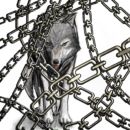
The antichrist tears himself free of his silvered prison.
He staggers across the world. He is in wrack. He is in ruin. He twitches at every noise, even if the noise is being made by a cute little kitten.
“Stop that!” he yells at the kitten.
The kitten mews.
“Agh!”
Then he apologizes, over and over again, to the kitten, and he staggers away again. He finds a box and he lives in it. He huddles down. He stares out at the rain.
He cannot stay there for very long.
The walls of the antichrist’s box begin to bleed.
– 11 –
Peter knocks on Edmund’s door. It is one in the morning.
Edmund sniffles.
Then he straightens. He pushes emotion away. He goes to the door. He opens it. “Yeah?”
“I heard you,” says Peter. “Through the wall.”
“What?”
“Everything all right?”
“What?” says Edmund. “No. I wasn’t doing anything through the wall. I don’t even have tear ducts. My heart’s in a box. I’m Edmund Gulley.”
Peter looks the room up and down. Edmund’s stuff isn’t even unpacked yet.
“That’s fine,” he says. “Want to get a coffee?”
“It’s three in the morning,” says Edmund, dismissively and inaccurately.
“This is Lethal,” says Peter. “They’ve got an all-hours bar, for crying out loud, even though they’re not allowed to serve anybody. Don’t worry about getting coffee.”
Edmund frowns. “But children aren’t to have alcohol,” he says. “This isn’t France, you know.”
“Right,” says Peter. “Get some shoes on and come on.”
Edmund frowns. Then he shrugs. Peter’s confidence is efficacious. Edmund goes to his closet. He throws on a pair of shoes and a jacket. He wiggles his toes in the shoes. He thinks about taking them off, putting on a pair of socks, and then putting the shoes back on again.
He decides to be wayward.
“Look at me,” he says, a few minutes later, as they creep down the stairs. “One night in this place and I’ve gone bad. Shoes without socks in!”
“Yes,” says Peter.
They reach the quad. Peter scans the place.
“They catch us,” Peter says, “and they’ll give us a hiding.”
“We’re already in hiding,” mutters Edmund.
“But,” says Peter, cunningly, “the other side of that is, we’re supposed to sneak around a little. It’s all part of the training.”
Edmund squints. Tom and Cheryl are walking past in the quad.
“What about them?”
“That boy’s got a hat,” says Peter. “He’s not like one of us.”
“One of what?”
“Human,” says Peter.
“What?”
“Listen,” Peter says. He signals Edmund and then scurries across the quad towards the administration building. He doesn’t actually say anything until they get there and are pressed against its outer wall. A searchlight sweeps past behind them. “That boy is practically scissors. Don’t trust him. Just look at his hat.”
“I’m looking,” concedes Edmund. The kether-hat’s so vivid he doesn’t even recognize his old friend underneath.
“And that’s in the dark, at fifty meters!”
“I see your point,” Edmund says.
Peter pulls a bit of wire out of his collar. He uses it to pick the lock on the building. Edmund eyes him. They go in.
“I feel conflicting imperatives,” says Edmund.
“Yes?”
“On the one hand,” Edmund says, “I want to punish my father for sending me here by becoming a bad child. On the other, I don’t like all this sneaking around and breaking into buildings.”
“Listen,” says Peter.
They’re on the second floor by now. Peter turns the lights on. He heads for Principal Goethe’s office. He turns on its coffee machine. He gets out a couple of cups.
“They wouldn’t even have a bar on campus,” says Peter, “if the students weren’t supposed to break in and steal liquor. But I don’t like being drunk. It makes my head funny. So I sneak at a higher level.”
Edmund looks around.
“We could sneak in and adjust somebody’s grades?” he proposes.
“Geez,” says Peter disapprovingly. He makes a face.
“What?”
Peter shakes his head. “You have the manners of a wolf,” he informs Edmund.
He pours them each a giant cup of coffee. Peter’s cup says, “#1 Principal.” Edmund’s cup says, “Thieving Scum.”
“Shouldn’t we—”
Edmund looks between the cups. He wants to offer to switch.
“Let’s stand on the roof and look out over the quad and drink coffee and brood,” says Peter. “Since you’re crying anyway.”
Edmund had completely forgotten. He also denies it. “I was not. It was keening.”
“It’s hard the first day,” Peter says.
“Yeah,” says Edmund.
They sneak up the stairs. Peter stops for a moment. “Dang,” he says. “Forgot to turn the coffee maker off.”
“Do we go back?”
“Nah,” Peter says. “I’ll just . . . scrub it out tomorrow night.”
“That’s very diligent,” Edmund says.
They stand on the roof of the administration building. They stare out over the quad. They lean against the Lethal railing. They drink coffee. They brood.
“It’s a good school,” says Peter. “They teach us combat, you know. And I’m training to be a ninja.”
“You?” says Edmund.
“Don’t knock it!” says Peter. “A man’s got to have an edge if he’s going to take on a scissors-swarm someday.”
“Yeah, but that’s so . . .”
Edmund looks for words. He takes a gulp of coffee.
“So Oriental.”
“Don’t knock the Orient,” says Peter. “It’s all one world from space.”
“Well, yeah,” says Edmund. He shrugs. “It’s just, you’re kind of — a solid-looking bloke.”
Peter sighs.
Edmund sighs.
After a while, Edmund says, “At home there’s a wolf larger than a horse.”
Peter looks sideways at him.
“He’s so beautiful,” says Edmund. “And so awful hurt.”
“I had a dog,” Peter admits. “But he died.”
“My Dad,” says Edmund. “I mean, Edmund, I mean, Edmund senior, Mr. Gulley, he thinks I’ve got to kill the wolf. Like, some kind of life lesson thing. We’ve all got to grow up and kill our own wolves or whatnot. It’s rubbish.”
“There’s a class in wolf-killing,” Peter says.
“No surprise.”
“There’s a whole series,” Peter says, “actually. Although I’m a scissors-track man, myself.”
“Rocks and rot?” says Edmund.
“What?” says Peter. “No, no. Serious scissors-killing. Like —”
He waves vaguely.
“Cannons, or ninja moves. Scissors can’t stand ninjas. They’re just so lethal!”
“Oh.”
Peter sips at his coffee. Edmund broods.
“I don’t want to kill it,” says Edmund. “I mean, I kind of guess I’ve got to, it’s my burden, but I won’t.”
“Why’d you got to?”
“It’s a world-killing wolf,” says Edmund.
Peter squints at him. He drains his coffee. He tosses the cup down to shatter against the quad.
“Skaal?” says Edmund, hypothetically.
“Haha!” Peter says. “Skaal.”
He turns on the railing. He leans against it and looks at Edmund.
“So that’s your story,” he says. “You’ve got a wolf in you.”
Edmund looks away. “Yeah.”
“Well,” says Peter. “I say, you don’t have to kill it. Just give it a good punch in the nose. That’ll show it who’s boss!”
“No,” says Edmund. “No, it wouldn’t.”
“One of them choke-collars?”
“That’s cruel!”
“My Mum says they’re perfectly OK,” says Peter.
“Well, your Mum —” Edmund hesitates. He can’t bring himself to insult somebody’s Mum, no matter how wayward he ought to be. “Your Mum is possessed of inaccurate notions, that’s what she is. She hasn’t seen somebody really choked proper.”
“That’s true,” concedes Peter. “My unarmed combat class was unexpectedly enlightening.”
Edmund finishes up his coffee. He puts the cup down delicately on the roof for the janitorial staff or, more likely, some hapless smoker, to discover.
“I want to let it free,” says Edmund.
“Yeah?”
“Yeah.”
“Freak,” says Peter. He grabs Edmund and he noogies him. Edmund is too distracted by the novelty of this to properly fight back. Eventually Peter lets him go. “Well, if you need any help taking it down after, or, you know, whatever, I’m right next door.”
“What?” says Edmund, blankly.
Lights come on in one of the offices below them.
“Erp,” says Peter. “Looks like it’s rounds.”
A clock tolls two, softly, in the distance.
“I’m out,” says Peter, and he’s over the railing, vanishing into shadows, and he is gone.
“What?” says Edmund, blankly, again.
He stares down after Peter.
Then he yells, “Hey!”
Edmund’s gotten better at this since his days with the Doom Team. He’s gotten stronger.
There is a wolf within him and in him. It is woven through him like a metal thread through a handkerchief or the Gulley funds through the economies of the world. He’s older and he’s stronger now. When the security guard bursts out onto the roof and sees him Edmund does not bother fighting him, or surrendering to him, but simply pins him with gleaming animal-eyes in the darkness, freezes him like a rabbit before a snake, and walks past him, down, and out.
When he gets back to his dorm he beats on Peter’s door, he complains at him, he says, “Open up, you beast!”
But Peter just calls out, “Studying!” and finally Edmund has no choice but to go, unsuccessfully, to bed.

– 12 –
Space princess assassin Lucy Souvante stops by the campus Konami Thunder Dance club.
She stares in.
A warm and tender smile spreads across the evil prophet’s face.
“Why,” she says, to the world at large. “You’ve actually got something interesting.”
She leans against a wall. She watches as they dance.
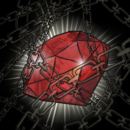
It’s Meredith and Max this time around. They’re going at it pretty hard, and they’re warping reality as they go — not too much, of course, they’ve got the Konami Thunder Dance safeties on, but even so the dance has swallowed up the ceiling in an endless night, bucked up the floor into twin intertwining towers, and is raining bits of apple and fire down from the sky onto her head.
She goes to pick up an apple slice — it’s pre-toasted! Mmm! — but Paul, who’s leaning against the wall and watching, shakes his head.
“That’s a bad apple,” he says. He jerks his head up towards Max, who’s dancing to some sort of hard-beat J-Pop. “From the song. You don’t want that.”
“Oh,” she says.
She looks at it.
“If I —”
“You’d probably be cursed to eat thistles and farm the ground and bring forth your children in sorrow,” he says. “Then you’d give it to me and I’d do the same! That’s why I don’t think people should dance Bad Apple against Human.”
“Oh,” says Lucy.
She tosses it aside. The apple slice screams as it splashes against the ground.
“I’m the evil prophet of space,” she introduces herself.
“Paul,” he says. “And shh.”
They watch. They wait. After a bit the song ends and Max and Meredith lean against the arm and headrests of their PlayStations and their towers lower and the world fades back towards its normal state.
Finally, Max lifts his head. He wipes away his sweat.
“Oh, hey, a newbie,” he says.
“I’m the evil —” starts Lucy.
“Want to try it?”
She considers. Then she smiles. “Sure,” she says.
After a while, she says, “This isn’t very much like rock-scissors-paper.”
“No,” Max says.
She chews on her lip.
“I’m Lucy Souvante,” she says. “I’m a space princess assassin evil prophet.”
Max shakes her hand. He smiles.
“Welcome to the club.”
He’s speaking welcomingly, so he isn’t implying he and Meredith or Paul, too, are space princess assassin evil prophets. He’s informing her that she’s welcome there: welcome to join the Lethal Magnet School for Wayward Youth Konami Thunder Dance club and learn how to dance the thunder dance and then to dance it with and against him, along with other interested students like Meredith, Emily, and Paul.
– 13 –
Edmund knocks on Andrea’s door. He opens it. He leans in.
For a moment the room is empty.
Then a heart beats and chains pull taut; the nithrid condenses, draws down from static cling in the socks and the dust bunnies and lightning in the machines, and becomes a girl.
She stares at him. Her eyes are blank.
“Wow,” says Edmund.
“Sometimes,” she says, and her voice has a catch in it, “sometimes I think I can almost get free of it. If I hold my breath. If I stop my heart. I can almost pull apart and stay — anyway, who the hell are you?”
“Sorry,” says Edmund. He sketches a bow. “Edmund Gulley, at your service.”
She is a blur of motion. She has a knife. She is holding it to his throat. He snarls. She is still stretching forward to attack, she has not secured her position yet, and that is why he is able to lean and skip back away, his leg coming up to smash its knee into her elbow; his leg is turning even as it rises and he snaps a followup kick out at her head.
She moves even faster now; she fogs out into a mist of storm and plunges at him, swinging a dozen knives held by a dozen strands of hair. He turns through them, snapping two of the knives out of the air and swallowing them down with his wolf-bite; his back is to her for a moment, and then he is coming in, his hand extended and his white teeth bared —
Her hair is wrapped around him; its ends still hold ten knives.
He is tense, frozen, but when they do not cut him he relaxes.
“You are not Edmund Gulley,” she says.
“Junior,” he says.
She hesitates. “What, really?”
“Really.”
“Oh.” She pulls away from him. “— Why you people have such redundant names, I will never know.”
He frowns at her. “Anyway,” he says. “Dad said there was a nithrid.”
“Yes,” says the nithrid. “I generate power and eat storms. And take classes. I am ‘a highly convenient monstrosity.’”
“Wicked,” says Edmund. “The wolf mostly generates dander.”
The comment falls flat.
The nithrid stares sadly at Edmund.
“Dear God,” says Edmund, realizing. “Did Dad say that too?”
“It is not a bad thing,” she says, without formally admitting it, “for a son to be like his father. You — you are his son, yes? Not the junior to some other Edmund Gulley?”
“Yes,” he says.
“I thought so,” she says. “It is an in-family arrangement. I can see the wolf in you, I think, too.”
He shrugs.
“It was the way you almost bit my head off and drooled acidic spittle,” she says. “But instead just kind of drooled a little.”
Edmund embarrassedly wipes the corner of his mouth. “I was ravening,” he says.
“Yes,” she says. “No doubt.”
“It’s true!” he says. “Sometimes I go ulfserk! It’s like berserking, only, less ber, more ulf.”
“Licking my face like a puppy and the like?”
“Yes! No!”
He frowns at her.
“That is ridiculous. Wolves do not do that. They are noble and vicious predators.”
“I suppose,” she says. “It’s all the same from the vantage of the storm.”
“I don’t like you,” concludes Edmund.
“Nobody does,” she says. She turns away.
“I just thought —”
“Yes?”
“My Dad,” says Edmund. “I thought, he wanted us to — I don’t even know. So I thought I would introduce myself.”
“You are tangled,” she says. “In my chains.”
“Maybe?”
“You will break them,” she says. “I think. That is interesting.”
She turns back to him. She studies him. She places her hand flat upon his chest. She tilts her head.
“If you have a heart attack,” she says, “I cannot help you.”
“I wasn’t expecting it,” he says.
“I —”
She frowns.
“It is a waste of my learning to jump-start someone’s heart,” she says, “if you are going to go around keeping it someplace else. Next you shall tell me that there is no point in my studying emergency medicine at all because I cannot treat somebody without shocking and distressing them.”
“Yes,” Edmund says.
“Yes?”
“That was not previously what I was going to say next,” he says. “But now, you may take it as stated.”
She considers this.
“I will teach you to kill,” she says. “I will teach you to dance. I will teach you to call the lightning. Then you will shatter the chains that are binding on us and I will boil back out to the sky. It will be a glorious transformation and the Heavens shall be made glad.”
“I didn’t ask —” he says.
“I didn’t either,” she says. “You will learn these things. I have decided it. If you refuse me, then I shall kill you here and now.”
“I don’t think so,” he says. “I’m Edmund Gulley.”
She grits her teeth.
“Fine,” she says, after a while staring at him. “If you refuse, I will get very angry, and write a stern letter, and never talk to you again, but I suppose that I won’t kill you. It would be against your human manners. But you will do it anyway.”
“Why?”
“Because you are like your father,” she says. “You do not want to bind things. You want to shatter chains and let your bound wolf free.”
“That isn’t what father wants,” says Edmund.
It’s almost reflex.
Then after a while he says, with a catch in his voice, “Is it?”
“I will teach you,” she says. “You will fly, Edmund. You will be free of the gravity of the world. You will dance, and you will call up lightning, and you will kill. You will become strong and you will break your chains.”
She breathes. Her heart beats painfully. She closes her eyes. She turns to him.
“Come,” she says. “Preemptive repayment: I will set you free.”
Edmund hesitates a long moment. Then he nods.
“OK,” he says.
She walks out into the hall. All the other doors close. She waves upwards at the ceiling and the light turns on. Edmund shivers as if —
This is what he thinks. It’s completely silly but he thinks it anyway —
As if the ghost of a duck were glaring at him from her back.
“Where are we going?”
“You can’t dance indoors,” she says. “That’s human insanity. So we will take our lessons —”
“Wait,” says Edmund. “You want us to dance in the quad?”
She looks over her shoulder at him.
He looks down.
He masters his embarrassment.
“Thank God,” he finally says, “for my wooden box.”
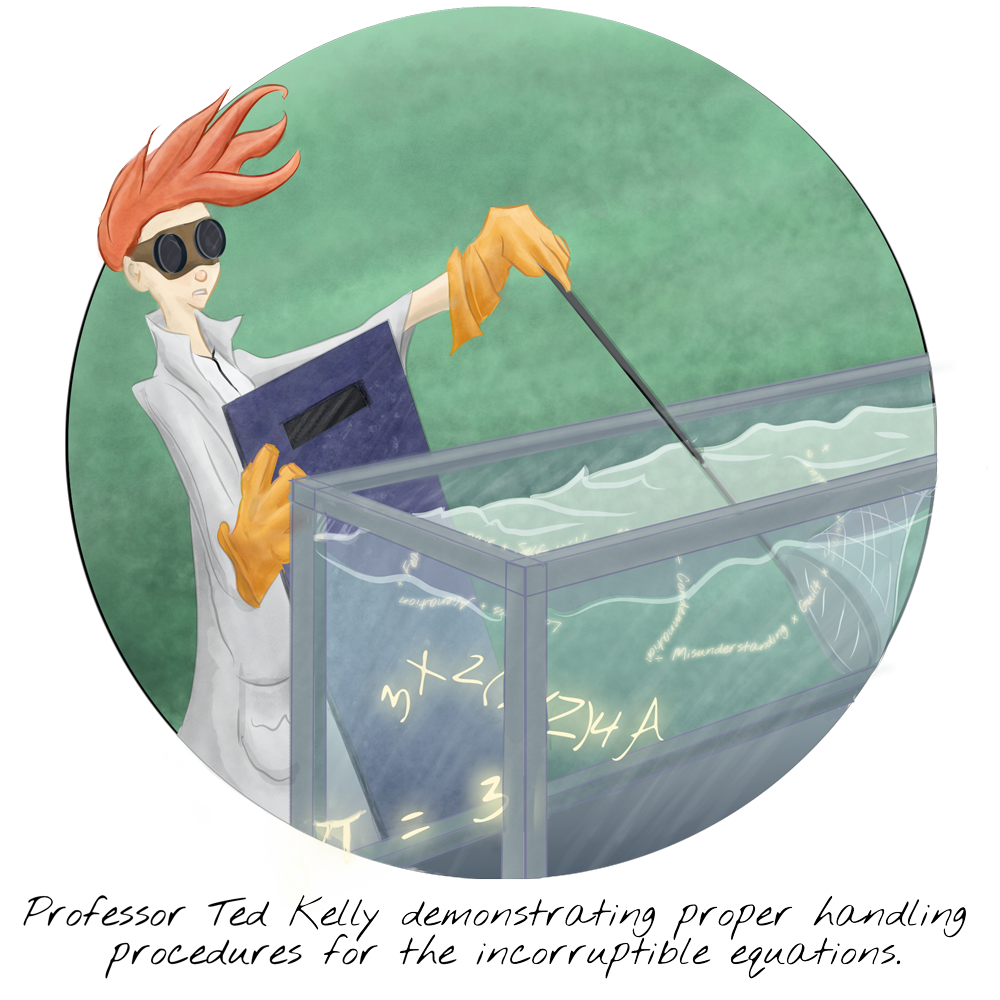
Incorruptible Equations
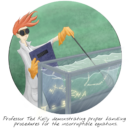
There is a shadow under Mount Hook, a shadow of something that has been or is yet to be, and from time to time it will slip down to the campus of Brentwood and weave its way through the rings of incorruptible equations that surround Professor Ted Kelly’s home.
This it will do because he dreamed of the shadow, on one occasion, and it has hungered for him since.
This is the kind of dream you have when you work too long at the Department of Esoteric Mysteries that is suspended over the pit containing the cruel demiurge at the Lethal Magnet School for Wayward Youth.
The shadow will hunt him, it will slip its way in to find him, writhing through the solid things and slipping around the jagged edges of the equations (the teeth of the Truth, the unbreakable, the undefeatable) that are writ into the walls of his home and office in incorruptible golden veins.
It will bring the cold with it.
It will bring ice and it will bring terror. It will flare a hood like a cobra’s and it will bare its fangs.
And it might seem for a moment, then, that the theoretical incorruptibility of the incorruptible equations is not so useful when it comes right down to it, that you can’t take the raw perfection of the Platonic world and implement it in our fallible reality, but that’s when it becomes most important, that’s when it becomes most critical (if you’re somebody like Professor Ted Kelly, anyway, and you’re hoping to show a bit of the nightmare to your students in class the next day so that you can finally impress upon them that showing their work and treating the incorruptible equations correctly is worthwhile and not just one of those things like algebra that they’re never going to use in the real world) that the incorruptibility of the equations is invariant over certain transformations but the shape of the coils and serifs of them is rather not.
For just a moment as it spreads its fangs the bedroom of Ted Kelly, Lethal Magnet Professor of the Incorruptible Equations, is rendered in polar coordinates; and the equations likewise; and in that frozen instant of the transformation the nightmare, the shadow, the prognostication of ice and doom that has weaved its way through the numbers and symbols and the teeth of them in gold, is cut.
It falls.
It is screaming.
And for a moment—
For just a moment—
There is hope that when the horror at Mount Hook happens or happened, somehow triumph will virtue and right.
It would be more of a triumph, of course, if the School didn’t confiscate the bits of the shadow; if the guards didn’t take them and rush them off to the Lab; if the treasure of his work were left in his own hands—
But, well. It’s math that’s incorruptible, not the world.
– 14 –
Edmund and Andrea dance.
They dance — that time, and others; they dance until Edmund is utterly exhausted, after the patterns of a nithrid’s ways.
“What are you?” he asks.
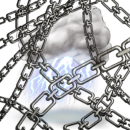
The quad goes dark when they are at practice. The clouds roll in and deepest night occupies even what would have been the brightest day. In that thick darkness are veins of darting color, purple, yellow, and white, as the eye tracks the lightning that is the nithrid’s dance.
Edmund tries.
He really does.
It is already the fourth session, now, and he is still half-choking with exhaustion, his own saliva, and chunks of heavy air by the fifteenth minute of the dance. He can’t even hold out long enough to get a good cardiovascular workout out of the experience. He’s too lost. Too staggering. Too inept.
He spins to a halt, tripping over an old stone fountain that he’d forgotten was there, and the nithrid slams into him. She isn’t sure why. Some combination of “to remind him that there is nithrid also moving on this track,” “humor,” and “because she does not decide not to slam into him before the fait is accompli.”
“Gah,” he says.
He sprawls there in the fading dark, bloody, with a nithrid on his back. She doesn’t bother getting all the way back up. She just sits.
“This is like wrestling with the wolf,” he says, and laughs.
She stands. She walks away a little bit. “The problem you are having,” she says, “is that you are not hacking the fundamental laws of the universe with your footsteps.”
“I’m not very good at that,” Edmund admits.
He rolls over and sits up.
“I could try eating the light or something,” he says, “but I didn’t want to get all cute in the first month.”
“Eating the light.”
She stares at him, then shrugs.
“No,” she says. “Don’t do that.”
She floats a few feet to the right. Her foot comes down. Where it touches the earth smokes; dark gathers; a numinous pall clouds the air. She sights a metal pole; she arcs to it: she leaves a trail of violet behind.
She catches her breath around a spear of pain all through her chest, swallows it down long enough to say: “Like thus.” before she must rest instead of speaking.
“Please remember,” he says, “that I am not actually a nithrid.”
“I know,” she says. “But —”
She ponders.
“You look at yourself,” explains the nithrid. “And you see yourself. You see the magic in yourself. And it wasn’t magic before, of course. It was only a thing before. Before you looked at it, it was only that which had happened: marvelous and physical but not magical or intrinsically affecting at all. Only, then you look. You look, and your own sight of it weaves it into magic. You become able to do what before you only inspired to do. Thus: nithrid. Does that make sense?”
She twists, a single writhing, convoluted motion that takes her four feet into the air; makes her form appear to dissolve into caryatids intertwining, bowing towards the center, incandescent, before the frog eggs and the whisked duck and the rainbow glimmers that enchain her snap her back.
“Like so,” she says.
“I cannot see myself doing that,” Edmund admits.
He squints at her.
“Nobody sees me doing that,” he says. “You don’t even see me doing that.”
“Is that so?” she wonders, distractedly. “Hm. That may be a thing.”
She arcs to the water of the fountain. She sits beside him. She is beginning to bleed from the edges of her mouth and eyes.
“It hadn’t occurred to me,” she says, “but I suppose I don’t see you people as storms. That’s so. I’d thought that that might just be because I’m outside you? But you are rough, gross and physical by nature, and all bound up to wolf and gold.”
“I am that,” Edmund agrees.
“It would be easier,” she says, “if you were naturally electric. If you were the Easter bunny, or something like.”
“Energizer,” says Edmund, with surprising insight.
“The energizer bunny,” she corrects herself. “But — you are not hopeless. It is not that bad. There is a potential in you to be a breaker of chains. A killer. A devourer. A wielder of the lightning. It is a dim and distant potential. It is drowning in your gross mortal fleshiness and the constriction of your pet wolf’s fetters but in you I see something golden, conductive. It is buried but it is there. So see it yourself, Edmund Junior. See it harder. Empower it with your eyes.”
“I can’t see it,” he says softly. “It’s your perception.”
She hesitates.
Then she waves a hand dismissively. “Just look harder,” she says. “It’s there.”
“Maybe,” says Edmund, “I wasn’t meant to — I mean, maybe I’m supposed to look at the magic that’s actually in me, and not . . . like, your nithrid-style stuff.”
She looks at him blankly.
“I mean,” he says. “Maybe I’m not supposed to be hacking the world with my feet. Wolves are supposed to pad quietly and not with great crescendos of thunder. We’re not like, you know, cats or —”
Edmund remembers that most cats do not clank.
“I mean, like kettles, or the like.”
“I am not your father,” she says, “or your faculty advisor. Please feel free to try this, if you like.”
“Right, then,” he says.
He concentrates. People walking by think about bothering him, but don’t. He looks inwards. He faces himself, as in a mirror. He tries to recognize the magic in him: the wolf; the storm. After a while he shrugs.
“I have nothing.”
“It is all right,” she says. “Two human eyes are clouded.”
“No. I mean, inside me,” says Edmund. He holds out his hand. He closes it on air, twists it, snaps it open and closed a few times as if grasping at something that he cannot feel. “Inside me, there is a yawning white nothing. I think it is the wolf. I think it is the thing that calls the wolf, the thing that frees the wolf, the white hunger that is in the wolf. It is a devour-some emptiness. It eats the eyes of the mind I use to look at it with.”
“Huh,” she says.
“You’re bleeding,” he says. He tilts his head. He looks at her.
“Please,” she says, waving it off, “finish your discussion. I have now become interested in this nothing.”
“But you’re bleeding.”
“I pushed too hard,” she says.
He squints.
“The cage of my bones is lined with knives,” she says. She touches her cheekbones. She touches her breastbone, then runs her hand down in front of her chest to indicate the ribs. “If I am too vast, too fierce, too quick, then they will cut me when I breathe.”
His face twitches.
“It is of no account,” she says. “I am a nithrid, that has been caught by Hans. I would rather focus my attention on whether you have actually seen something worth seeing, and therefore worth stirring into a storm with your inner eyes.”
He isn’t listening.
She waves a hand in front of his face. He isn’t looking.
She says something. He does not hear it. She says other things. He does not hear them. She shakes his shoulder. She pushes him. She becomes angry. She pushes harder but he does not feel it. He does not react.
He pours it all down, down, down, into the box around his heart instead, until the world is humming, empty, barely present around him; and even still he must fight back the pain.
It’s not about her. He wishes it were just about her. He doesn’t even really like her.
It’s not about her.
What is hurting him now is the same gnawing emptiness he’d mentioned, only seen from the other side. It is the same knowledge that gripped Linus Evans, once, when he felt Hans’ death and knew the cleaning man would rise; the same that gripped poor Betty’s mother when she saw the turtle-people come.
He is hurting because he has acquired a fuzzy, awful awareness of the sea of hurt and wrongness that is suffusing the mortal world.
Finally he lets himself hear her.
He says, “I’m sorry. I can’t help you. I can’t help anybody.”
“. . . I was not asking for your assistance,” she tells him. “I was teaching you. . . .”
She stares at him blankly.
He is distant. He is mahogany, balsa wood, and teak. He will accept it.
“Of course you didn’t,” he says.
He gets up.
He can feel it, behind him. She is breathing. With each breath she is cut. He can feel it, inside him. The wolf is hurting. The fetter cuts into it. And somewhere in the world Linus Evans, who was his friend, is still alone, and suffering, and the antichrist; and Tom, he thinks, must be off in some hospital somewhere recovering from being ophidian; and Jane and Mouser doubtless wandering the streets eating out of the trash bins; and everything is wrong, wrong, wrong, and awful, and there is no brightness in it; it is rising like a storm of pain and horror in him, and he bumps into someone, barely even manages to make himself look up and apologize, o how wayward I have become —
“Linus?” he says.
“Bro!” says Linus.
“Oh my G— my— my— oh my sweet, euphemistical goodness,” says Edmund, dropping the rage and pain from him like a backpack that he’s just shrugged off. “Linus?”
He hugs Linus. He pounds his back. “How the hell have you been?”
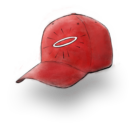
– 15 –
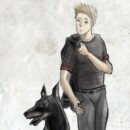
Peter stops by Andrea’s room. He knocks. He waits. After a while she comes down the hall.
“I’m not in there,” she tells him.
Gamely, he tries, “Are you certain? We could check.”
“That is —”
She hesitates. She looks at him. “That is attempting to be clever, to one who has known the greatest of dwarf-smiths.”
“Well, yes,” says Peter.
She opens the door. She goes in. She nods sideways and he follows.
“Why,” she says, flatly, looking around and spotting herself, “so I am.”
Technically he could get in trouble for being in her room but the penalties for being wayward at the Lethal Magnet School for Wayward Youth are markedly lax.
She turns her attention from her own presence to his. “Did you need something, Peter?”
“There’s a dance,” he says, bluntly.
“I’m aware,” she says.
He goes a little still. “Are you?”
“It’s my nature,” she says.
“I don’t understand,” he says.
“As a dance student,” she says. “It is my nature to be aware of the fact that there are dances. I see the flyers on the wall; I think: aha! And I file the information in my mind.”
“I thought it might be that other thing,” he says.
She doesn’t bother lying about it, nor does she confess. She just looks at him with her pupils slit like a cat’s.
“I was just thinking,” he says, bluffly, moving on, and rubbing the back of his head, “that since you’re an alien freak and all, that you might not have anybody to dance with.”
“With,” she says.
“Yes,” he says. “Like, I mean, a boy.”
She stares at him in complete bafflement.
“You know.” He puts one hand in the air, and the other hand lower in the air, and mimes turning. He cannot quite manage a quarter-rotation before embarrassment stops him from proceeding further. “Like that.”
She scratches above one ear. “How extraordinary,” she says. “I had assumed that my teacher was merely joking.”
“You’re making fun of me,” Peter says. “I won’t have it. I’m a human, you know, not like . . .”
He trails off, because he can tell from her reaction that she wasn’t making fun of him.
“You really . . .” He laughs a little. “You really . . . no way.”
She blushes. She looks off. “It’s not funny,” she says.
“Dang right it’s not,” he says. “That’s awful, is what it is.”
“What?”
He sprawls on her bed. She almost objects, because he hasn’t taken his shoes off, but then she ignores it. “You freaks are all so lonely,” he says.
“There’s more of us? Of me, I mean? Of . . . I don’t know what grammatical case to use,” she says.
“I knew the Devil when I was a kid,” says Peter. “Had to punch him in the nose to get him to go away. I always felt bad about that, after.”
“What?”
“I thought, maybe he comes around, temptin’ everybody like that, because he doesn’t have any other way to talk to people. But now I’m sure.”
He sits up.
“There’s a wolf-boy,” Peter says, “too. Guy couldn’t be any stiffer if you shoved a triad of trissors up his butt. Er, if you’ll pardon my saying so.”
“Edmund,” says the nithrid. “He is not like me.”
“Could have fooled me,” says Peter.
“He is useless,” says Andrea, bitterly. “I am trying to teach him transcendence, but how can I? There is nothing to transcend.”
Peter swings around. He sits up. He looks at her.
“Him?” he says. “Oh, you shouldn’t.”
“What?”
“He’s too tight-wound already,” says Peter. “You push him and you’ll split him in half.”
“He’s not splitting,” says the nithrid. “He’s just . . . lumping there.”
“Look,” says Peter. “Kid thinks he’s a milksop who ought to grow harder. But he’s not. He’s a born rotter, that one, trying to hang on to the gentle way. You give him too much rope, he’ll just tie it to a tree and hang himself. Stands to reason.”
Her eyes search his face. “You’re joking,” she says.
“No,” he says.
“I need him,” she says. The chains through her hurt her as she breathes. Her ghost-duck glowers. “He will burst my chains. I will go out, alive and free and blasting about the world. I will shatter its cities. I will fill them up with the anima of God. They will look at me, and him, and we shall storm and marvel; we shall fill them with wonder at our glory; we will light the souls of the survivors and make them great.”
“Yeah, yeah,” he says. “Kill, destroy, get admiring looks, oh how marvelous! Whatever. If you just do — whatever — then you won’t be alone, right?”
“What?”
“You all think that,” he says. “If you just — break your chains. Kill people. Tempt people. Eat people. Wolf stuff. Devil stuff. Whatever. If you just do that, then everybody will love you. That’s how the Devil thought, too, you know. That it wasn’t him, or me, that stood between us. That it was God, or mebbe Hans. That it’s all that easy, you just do what you want and everybody will love you and it won’t actually be bad.”
“Stop it,” she says.
“You know,” says Peter. “You people don’t have a right to be on our world. Doing what you like, spreading fear and devastation — you’re just —”
“Stop it.”
He stops.
He looks down at his hands for a while. She paces back and forth. Then he looks up.
“So,” he says, “I was wondering, if you wanted to dance. With me. At the dance. But obviously I was —”
“Fine!” she says.
“Huh?”
“Fine,” she says. “Get out. I’ll dance with you. Go!”
“You don’t have to,” he says, as he backs out of the room. “I’ve just served you two big steaming platefuls of truth, you can —”
“Get out!” she yells, and throws a shoe at his back and it dissolves into lightning as it touches him and he convulses and the back of his uniform smokes and he falls painfully against the wall as she slams the door behind him.
A few other doors are open now. A few girls are peering out and looking at him.
“And then there’s that hat guy,” Peter says vaguely. “I bet that hat’s one of them, too. I bet that the hat needs people.”
He gives the floor monitor an awkward shrug and he walks away.
– 16 –
“I,” Linus explains proudly, “am now a student at the Lethal Magnet Academy for Wayward Youth.”
“You? Wayward?”
“I know,” says Linus. He brushes imaginary crumbs off of his waistcoat. “But the truth is, I need an education.”
“Can’t you just,” and Edmund makes a vaguely magical gesture.
“Watch,” Linus says.
Linus’ black dog appears. It pants. It attempts to instruct them in geometry. It fails.
Edmund blinks and it’s gone again.
“I see,” Edmund says, because he does.
“Ever since Tom,” says Linus. He hesitates. Then he smiles a little. “Well, it struck me. I mean, what if someone cleans the Devil out of me someday? Don’t I need to be ready for an ordinary life? What if I wind up wanting — you know — kids, marriage, a career, all that stuff?”
“Dang,” says Edmund. “Being shuffled through an endless series of foster homes has done you some serious good, man.”
“Ha ha,” laughs Linus.
It should be embarrassed laughter. Edmund clearly thinks that Linus has been doing something normal and proper and civilized, like shuffling through a series of increasingly baroque and terrifying foster homes, when in fact he’s been living in a bloody box —
But it’s not embarrassed laughter. It should be, but it isn’t. Edmund’s here. He’s found Edmund.
The laugh’s just joy.
“Let’s go get a drink,” Edmund says.
“Pardon?”
“There’s a bar!” Edmund says. “They’re not allowed to serve us, but we’re totally allowed to steal drinks. I mean, ‘allowed.’”
“Edmund,” says Linus in a tone of pleased shock.
“Or coffee?”
Edmund spots Peter across the way. He waves vigorously. “Oi! Peter!”
Peter squints at them. He comes over.
He stares rudely at Linus.
“This is my mate Linus,” says Edmund. He beams. “Him and me, we used to hang all the fucking time. Fought Venusians and stuff.”
“Oh,” says Peter, in sudden fury, “so that’s how it is, is it?”
“What?” says Linus.
Linus draws back a bit from Peter’s glare. He blushes.
“Just, spit, spot, off and he’s making some other kid the antichrist? Is that all I was to him?”
“What?”
Linus Evans, it must be admitted, was the Devil’s second choice.
“Listen,” says Peter. He juts his chin. “You can just tell him that I don’t care. I didn’t want the job. That’s why I punched him! I am only in this to smoosh scissors.”
“Tell who?” Linus says, bewildered.
“Oh, yeah,” Edmund remembers. “Peter knows the Devil too.”
“Bloody bastard thinks I care,” says Peter. “Well, I don’t care! He can run around doing his Devil stuff with whomever he wants! I’m a good, church-fearing Christian. Going. Church-going. Dang it. Fudge.”
He snorts, turns his head away from Linus, and he stomps off.
“I guess,” says Linus, scratching his ear, “that he doesn’t care about the Devil.”
“Come on,” Edmund says.
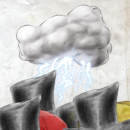
There are ornamental statuary angels scattered through the Lethal Magnet School’s grounds. They are much like ordinary statuary angels but they are branded Lethal and have this look in their eyes like if there were any wolves there, they’d want to kill them.
Peter is kicking one of them, hard, over and over again, in the leg.
– 17 –
For a while Linus’ presence makes Edmund happy; but that happiness frays from him over time.
Each time Edmund sees the nithrid he is reminded of the blood.
Each time he sees — practically anybody that isn’t Linus — he’s reminded of the fact that eating people is considered contrary to the cornerstone principles of decorum, even at the Lethal Magnet School for Wayward Youth. And yet he’d like to. He really . . . kind of . . . would.
Each time he goes to bed, in his furless bed, in his bed that does not breathe, that is not warm, or, well, not warmer than a normal bed, at any rate, he is reminded that he is alone and far from his wolf, for all that the wolf is in his blood, is in his bones, is something that trickles through him every moment when he breathes.
He can’t take it any longer.
He begins to brood. He begins to listen to Linus’ poetry and it speaks to him. He begins to wander aimlessly through the foggy nights.
He goes to that promontory of the hat cemetery that curls through Brentwood to the edge of the Lethal Magnet School and he climbs up and he throws down his hat as an offering, stomps it thrice, and lopes up to sit on a high peak of dead, abandoned hats and sulk.
Much to his surprise, he is not alone.
“Oh,” says Tom.
He looks Edmund up and down. He tilts his head to one side.
“Why do dwarves have to tie up everything good and marvelous in chains that hurt them?” Edmund says.
“It is a mystery,” agrees Tom.
He looks up at the sky. His eyes glint with dream-light. One day some child on a distant world will look back down at their sky; will catch a glimpse of Thomas’ dream-wroth; and its alien heart will move.
That is countless millennia from now.
That is not today.
“I’d say,” says Tom, “that when we encounter an alien purpose, a thing that moves but not in the way that we expect it to move, that has a dream that is its dream and not our dream, that it is natural to want to tame it to our own ideas. To simplify it, to bind it down into that which aligns with ourselves, and that which is our enemy, so that there is no expression of its being that is not in those terms that are our own.”
“That isn’t an answer,” says Edmund.
“Hm,” says Tom.
He takes down his hat. He holds it in his hands. He plays with the rim of it. “Sometimes I think I am my own worst enemy,” he says.
“Yeah,” says Edmund. He looks at his hands. Sometimes he wants to bite his fingers off, gently, chew them, swallow them, feel the warmth of Edmund in his gut. Sometimes he wants to bite off his own head. He gets so hungry.
Then he does a double-take, because the hat’s come off.
“Tom?”
“Huh?” says Tom. He waves a hand vaguely. “Yes. That is my name. Thomas the First, if you like, or Tom Friedman. I am the head boy of the House of Dreams —”
“Dude,” says Edmund.
“And if you are torn,” says Tom. “If you are at war within yourself, or unfocused; if you are given to two destinies, or to no destiny at all —”
It percolates, like svart-drink flowing through the ill-named and ill-omened coffee-makers of the House of Dreams. He realizes.
“Edmund?”
He is crying. Why is he crying? He can’t imagine it. He’s Thomas I, of the House of Dreams. He is basically a god. Also, a science adventurer. But he can’t help it. He is laughing and he is crying.
“Linus is here too, man,” says Edmund. “Oh, God. This is so awesome.”
“Linus?” says Tom. “Linus? I looked, man. I thought the Devil’d taken him.”
“He was being shuffled through a series of increasingly baroque and terrifying foster homes, as is traditional in our beloved, post-cisorian twenty-first century England, Tom! But now, he’s here!”
“How is he?”
“He’s great,” says Edmund. “He’s great. He is sneaking into a nunnery even as we speak.”
Tom squints at him.
“Fine,” says Edmund, “it’s a school trip to Leominster. But it totally counts.”
Tom laughs.
After a while, he wipes his eyes. He blows his nose. He smiles.
“Wow,” he says.
He flops down on the hill. He leans back. He looks up at the stars.
“Wow,” Edmund agrees. “You’d think there’d be some kind of spiritual radiation that’d keep him out, but apparently that’s only if he forgets to bring his chicken blood.”
“Ah,” sighs Tom, reminiscing.
After a while he says, “I was going to offer you my hat. Why was I going to offer you my hat?”
“I — don’t know?” says Edmund.
“There were dwarves,” says Tom.
“What?”
“You were saying something about dwarves and rot. Only, I wasn’t paying the least bit of attention.”
“We were conversing!”
Tom smiles apologetically. “That’s my marvelous auto-conversation ability,” he says. “I was totally thinking about dead mice.”
“Ha,” says Edmund.
He leans back too. He sketches in the sky with a finger. It doesn’t take, although maybe — after all his lessons — there’s a little tiny bit of violet light that follows it. Maybe. It’s ambiguous.
“Do you always give your hat to people when you start thinking about mice?” he says.
“Only you, Ed. Only you. Seriously, what’s up?”
“There’s a girl,” Edmund says.
“O ho,” says Tom. “You sly dog.”
“What? No!”
Tom giggles.
“Sorry,” he says. “I have just always wanted to call you a sly dog.”
Edmund cracks up. Then he tells Tom, “That is by no means funny, you know.”
“I know.”
“I have a wolf bound through me and in me,” says Edmund. “I want to eat you. I mean, right now. I mean, the kind of eating that leaves you dead.”
“Sup dog,” Tom offers.
Edmund winces.
“Tom,” he says. “Seriously.”
Tom sticks his tongue out. “You cannot eat me, Edmund. I am a science adventurer. I would just subdue you — with science! Besides, your girl is unlikely to approve. She would look at you and the slaver and the bits of Tom you have on your mouth and say, ‘Eek! You cannibal! This relationship is over!’ I trust you to avoid such eventualities as that.”
“Bah,” says Edmund. “I’ll just tell her I was saving the world from ophidian planet-inheritors.”
Tom’s smile flickers. It goes out. Then it comes back on a bit.
“Perhaps,” he says.
“She isn’t really a girlfriend, anyway,” says Edmund. “She isn’t into that kind of thing. She’s more of a —”
He waves his hand around.
“Candidate Doom Team member, if you know what I mean.”
“Oh.”
“I do want to free them,” says Edmund. “I want to let them go.”
He’s sitting up now. He’s grinding his fingers in the hats. He’s trying to find something, some way, to let his emotions out, but there’s nothing, he can’t, there isn’t, all he can do is vigorously massage dead hats.
“They’re so hurt,” Edmund says.
“If you want,” says Tom, “I can give you something —”
“Yeah?”
Tom has stopped. He is silent for a while. “Pardon. I am just wondering if my marvelous auto-conversation ability has led me out onto a conversational branch which, now that I am paying attention to it, I should retreat from. This is a transparently bad idea. But —”
“But?”
Tom smiles. “But it is through exhaustive implementation of our bad ideas that we discover at last the good ones. If you want to let ‘them’ go. If you want to become something that can let them go. Wolves that eat the world. Whatever? I can help you.”
“Really,” says Edmund flatly.
“I can’t predict what’ll happen,” says Tom. “Maybe that’s not even really who you are, you know? Maybe deep down you’re not a wolf-boy but a proper science adventurer. Or even some kind of holy saint! But —”
He shakes his head, vigorously.
“No matter. I can give you purpose, Ed. And I can make you more.”
“You can help me,” says Edmund. He licks his lips. He looks at Tom and his eyes catch the light of the drifting moon. “You can help me free Fenris?”
“Aren’t you supposed to do that anyway?”
Edmund’s voice has gone to begging: “Can you help me?”
In his head is the memory of the nithrid breathing, and the blood dripping from her mouth, and his conception of the spikes; and Fenris’ horrid wounds —
“Yeah,” says Tom.
Tom tosses him the hat.
Edmund looks it over. He turns it upside down and right-side up. Then, with a shrug, he puts it on.
He flails backwards.
Edmund seizes there magnificently upon that hill of hats; he flutters like a kite in a gale-wind. He tries to tear the hat from his head; he screams; his eyes roll back and his hands twitch and his fingernails sharpen and grow long.
It is pounding through him. He cannot think.
His mind keeps glancing off of the walls of the hat’s structure in him like a dazed man staggering into walls of polished marble, granite, slate. They are slick, the eyes of his mind are confounded, he cannot focus on the things that obstruct his thoughts because no sooner does he see them than his attention chases its own reflection in great slick streams into his hidden thoughts. His mind bruises itself from within; flails; he tastes bird’s spit, four simian arms, and what he can only imagine to be the torment of the willing, the clanking footfalls of some cat, the bearing witness to the wrongness, and the perseverance of hope.
Hope tastes, in case you’ve ever wondered, like a hat.
Lacerations spread around Edmund’s four limbs. He is cut, he is scarred, he is ripped and mended in a moment. Chalk-white flecks, pale veining, and bits of silver spread from the whites of his eyes into the iris and the black.
The white wolf-gold that is wound through him and around him is pulled shockingly straight and tight against his soul; it is snapped out from both directions like a cord pulled suddenly into a knot; his own soul frays. The hunger in him explodes; it alloys with him, within him, and through him, until there is no part of him that is not whole and sound and rife with the hunger’s rancid touch.
He is made starved in a world of chains.
The kether-hat floats from his head and he scrambles in the graveyard until he finds a hat of pale white to match his soul.
He rests there, for a moment, on his hands and knees in the hat cemetery. His head hangs low with its white cap on.
Tom picks up his hat. He stares at Edmund thoughtfully.
“I’d hoped you’d be in Dreams,” he says. “But Dreams wears a night-hat. What are you? What name is given to your House?”
An intuition moves in him.
“Hunger?”
“Tom,” says Edmund. His voice is weak.
“Yeah?”
“Can you do me a favor, Tom? Please?”
“Anything,” Tom says.
He tries to take in a sharp breath of pain and stops. Edmund’s hand is in Tom’s lungs. It’s pulling out a handful of . . . stuff. Edmund’s shoving Tom down onto the hats. Tom’s heart beats rapidly. He can’t think. He can’t breathe. He is drowning in the stench of hats.
His body is heavy.
“Can I kill and eat you, Tom?” Edmund clarifies, just in case Tom will live long enough to confirm or retract his broadly stated answer. Edmund slurps the bite from his hand, drops onto Tom, and prepares to rip out Tom’s neck with a snap of his jaws.
A dream-wroth falls onto Tom instead.
Tom ducks aside. He rolls. He staggers.
He shudders out a mental command to his robot bees. They swarm out from their hiding places in Tom’s backpack and the little nest in his hat. As Tom holds the crowning hat to his head and rolls away, the bees pour over Edmund and distract him from his prey.
Black blindness threatens to drown Tom’s vision.
He digs an ampule out of his pants pocket. Edmund is snarling, screaming. Tom jams the ampule into his own arm.
He watches Edmund clawing at the bees, then runs.
Ten seconds. He guesses that he has ten seconds; and —
The bees are gone. His life is gone. He is —
Tom glances back.
Edmund’s head is moving like a squirrel or dog preparing for a jump. Tom charts things. He sees a hope. He moves, he runs, his head is down, he can’t breathe any more, his heart is stopping —
Edmund leaps. He lands a foot from Tom, intending to press his attack, but he doesn’t.
He is standing, to his surprise, on a patch of quickfelt, the most hazardous of haberbogs, an Edmund-devouring morass of hypersaturated hats.
He sinks.
“I’m dead,” whispers Tom. “I’m dead.”
He is still walking.
“I should be dead by now.”
He cannot understand how he is still walking. Science cannot explain it. This makes him weep and then go into denial.
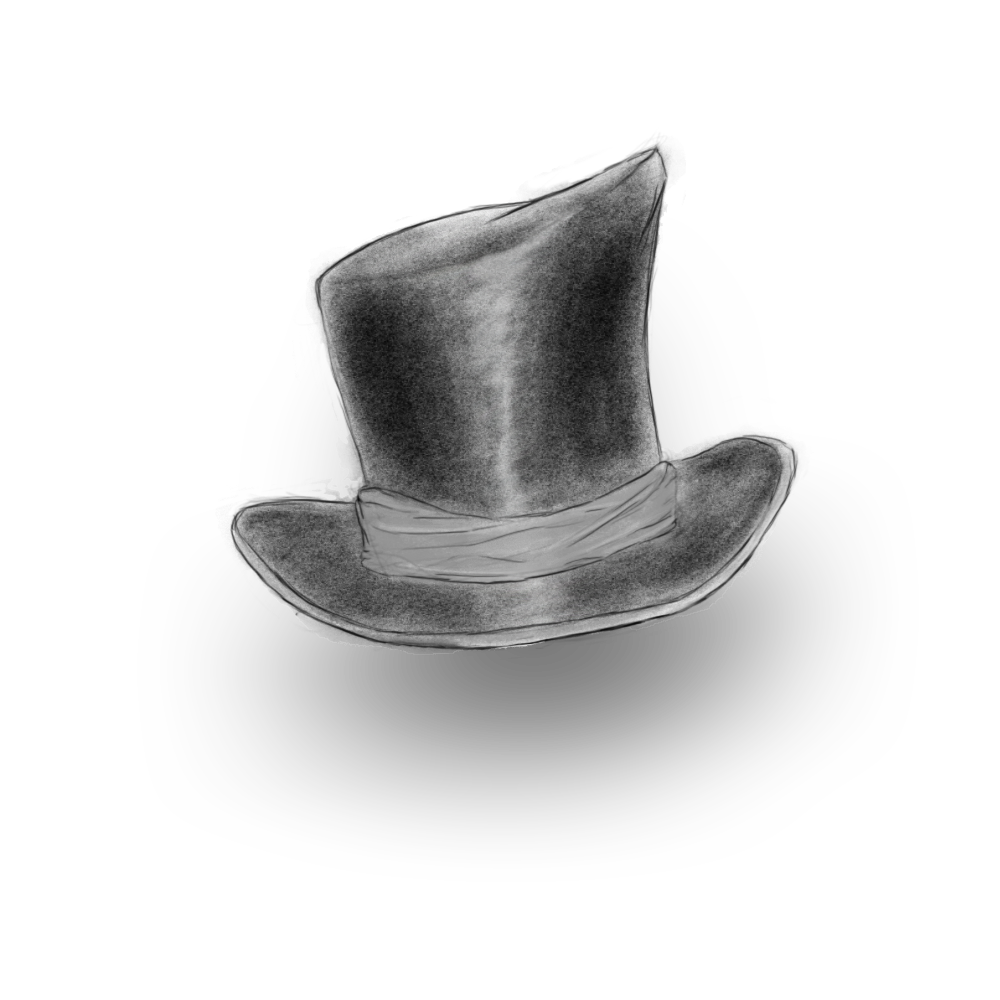
He is alive not because of the ampule, or because of some hardiness in his body, but because of an alien vitality. It pours down into him from the sky; from the world; from the crown of his wicked hat.

– 1 –
It’s a week or two earlier.
Lucy attends an underground fighting tournament.
There are rings and rings of people fighting down below. There are at least four battles going at any given time. It’s dark and the area is tented like a circus.
She squints down.
She pokes the girl sitting beside her.
“You,” she says. She waves her underground fighting playbill. “Human girl. Tell me of Sid and Max.”
Emily glances at her.
Lucy suddenly flashes on an old Vulcan salute. She flares her nostrils. She looks away.
“Nevermind,” she says.
“Ha ha!” says Emily. She sing-songs, “Max has a fan-girl.”
The evil prophet of space kills her —
Wait, no.
That’s a pretty sweet viper palm, admittedly, but it goes through where Emily’s neck had just been and not through Emily’s actual neck. Emily is on the floor, having just kicked out the metal support from under Lucy’s chair. The evil prophet of space tumbles forward and lands awkwardly over the shoulder of Meredith, who was sitting in front of them.
“Club represent!” says Meredith, pumping a fist.
Lucy hisses and thinks about killing her, but because Meredith is in the Konami Thunder Dance club she does not. Instead she awkwardly rights herself.
“I’m Emily,” Emily says. She is holding out a flat hand. Lucy stares at it, waiting for it to writhe with some sort of aegis of evil prophecy, or possibly stupid-Vulcan-salute-girl cooties, but it doesn’t. So finally, resentfully, she shakes hands.
“Lucy,” sulks Lucy.
“Oh! The new girl.”
“I am not —”
Lucy sighs.
“I am here to watch Max’s fight.”
“Too late,” says Emily. “You just missed — just kidding sit down.”
Lucy eyes her. Then, showing off, she snaps her fingers and restores her chair to solidity with the power of the wicked god of space.

– 2 –
Edmund and Peter weave through the audience.
“It’s good,” Peter says.
He’s using his ninja skills to balance three buckets of popcorn as they scramble to their seats.
“It’s good,” Peter says. “It’ll make a man of you, this place will.”
“I ate a death ray once,” Edmund says.
Peter shrugs eloquently.
They sit.
“Also, we’re in the audience.”
Peter ducks forward as a throwing axe smashes into his seat. He smashes it through the back of his seat into the person behind him with his head.
Edmund waves off a snake someone has thrown in his direction.
“It’s an audience participation thing,” Peter says. He hands Edmund a bucket of popcorn.
There are rings and rings of people fighting down below. There are at least four battles going at any given time. It’s dark and the area is tented like a circus.
“Oh, man,” Peter says. He points vaguely. “There’s Sid.”
“Sid?”
Sid is squaring off against Max. They’re in the summoners’ circle. That’s where the summoners fight.
“Know your wimps!” says Peter. He spits to the side. “He’s the worst-ranked kid in your class. Cosmic whipping boy, that one is, but no, he’s gotta think of himself as a winner.”
“He looks like he’s got potential,” Edmund says.
“That’s just his summon,” Peter dismisses.
Sid’s scraped out a summoning circle in the dirt of the summoners’ circle. This always sounds redundant when he’s talking about it to people but it doesn’t feel redundant at all when he is fighting for his life.
Light glitters upwards from his circle.
He cries out, INTIMATION!
That’s the best summon he can manage right now. It’s an intimation that he might one day summon something better.
The ninjutsu fight from a different ring storms out through the audience. Two of Peter’s classmates are a stuttering, tumbling blur of weaponry, clashing, vanishing into ninja-space for a step or two and reappearing in a spinning bundle out over the audience’s chairs. Emily starts up from her seat, then settles back into it; she’s too far away to do anything —
There’s a scream as one of the prophesy students takes a nunchaku to the eye.
Meanwhile, Max stomps the ground with his summoning stick. It’s like a regular stick, but at the bottom it has the reversed imprint of a summoning circle on it. It saves time.
“HAND PUPPETS!” Max shouts, and tosses aside the stick.
He summons two hand puppets. They resemble sea monsters. They fit neatly over his hands.
Sid launches himself at Max, wreathed in the intimation that one day he might summon something that will totally show Max what for. Max stops him with one sea-monstered hand held firmly against his head.
“Oh, that’s a good show,” says Peter.
He snatches a napkin — well, a headband — from the tumbling ninjas as they go past and he wipes his mouth. “See, you lose points if you touch your enemy directly, but Max’s summon lets him put his hand on Sid’s forehead fair and square.”
Sid continues to flail.
“You’re sure it’s not potential?” Edmund says.
“It’s INTIMATION,” Peter says. “Geez, you’d be a sucker for CERTAIN DOOM.”
The mouth of the sea monster puppet in Max’s other hand begins to gleam. It is building charge for a puppet beam.
The light brightens.
Sid ducks under Max’s hand. He pounds the earth. He free-summons DIRT SPEAR. This fails because free-summoning is an extremely advanced topic and only three people in the world have ever managed it. Instead there is only the sudden, furious intimation of a spear striking up from the Earth through Max’s bowels.
“Ha ha!” says Max. “I’ll be regular tonight!”
His sea monster hand puppet’s maw opens. He blasts Sid.
Sid falls.
“Ooh yeah,” cries Max. “Who’s the champion?”
That is when Eugenie, whose summon is a gigantic four-armed ape, steps into the circle.
“Oh,” says Max, embarrassed. “Right. That would be you.”
Sponsors
Today's
STRANGE ENCOUNTER ...

Boot
